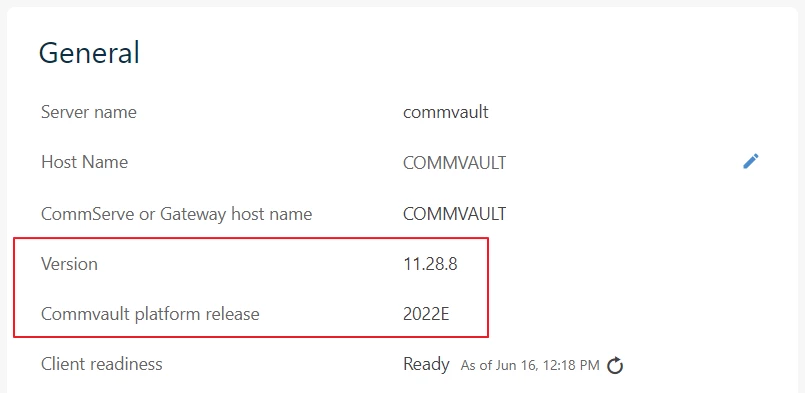

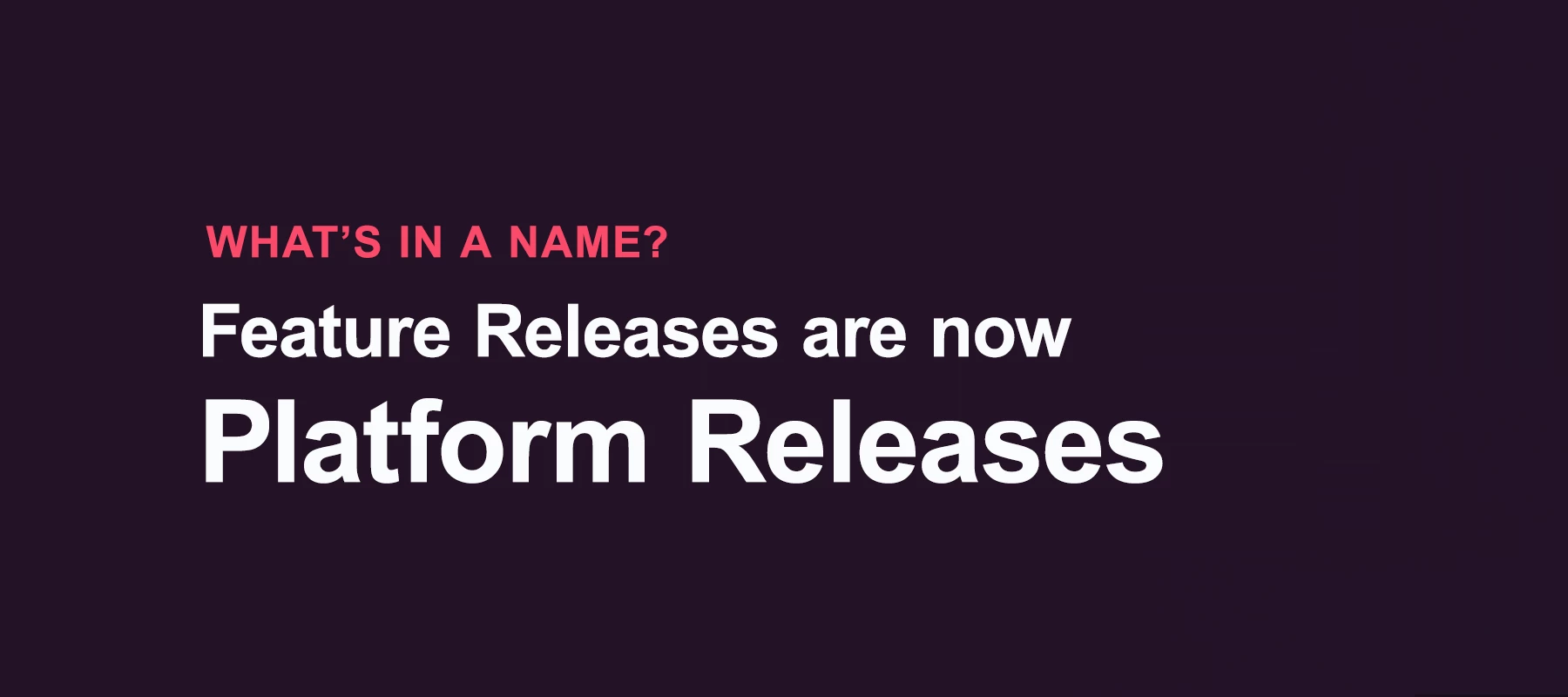



Commvault Feature Release 11.28, currently in Tech Preview and set for General Availability in August 2022, will now be referred to as Commvault Platform Release 2022E.
Like most software companies, Commvault regularly provides software updates in order to bring new features and functionality to our customers. We had originally referred to these as “Service Packs”, using a numbering scheme that identified both the software version and the update version. For example, software Version 11 (first offered in 2015), Service Pack 18. Because this is premises-based software – requiring the customer to download, update, and maintain it themselves – customers elect to update their software with varying frequency, depending on their business cycles and internal IT resources. To help this process, we would intermittently designate one as having Long-term Support (LTS). Long-term Support is a product lifecycle management policy in which a stable release of computer software is maintained for a longer period of time than the standard release. This typically means that the customer would receive security, maintenance, and feature updates for a longer period of time. This is especially important in the world of traditional enterprise software. Knowing that a release had Long-term Support provides strong incentives to upgrade deployments and take full advantage of the latest features and functionality. Unsurprisingly, Long-term Support (LTS) releases have proven to be quite popular with our customers.
In 2020, we made the decision to rename Service Packs as Feature Releases, to better reflect the continuous innovation and useful new features that were being added regularly to our core product. The first of these was Feature Release 11.19, made available in the first quarter of 2020.
Beginning with our latest release – 11.28, currently in Tech Preview and set for General Availability in August 2022 – we’ve made the decision to utilize a new naming convention: Platform Release, and will utilize the suffix “E” to denote Extended Support… in essence, Long-term Support. By adding the year to the release name, we believe it will make it easier for you to know exactly how up-to-date your Commvault deployment is, along with knowing whether or not your release will receive Extended Support. We’ve also changed the release frequency from once-per-quarter to a twice-yearly cadence, which will enable more time for development, while enabling Commvault users to make updates less frequently.
Why “platform release”?
Going forward, we plan to roll out our enterprise software product releases – along with new releases for HyperScale X and Distributed Storage – holistically, as part of a comprehensive Platform Release. (Note that our Metallic SaaS product releases are in no way impacted by this change. Those releases remain completely separate, with their own naming convention and update cadence.)
Why the calendar year?
Using the calendar year in the name will allow you to easily determine whether or not you are on the most current release much more intuitively than the previous FR 11.XX designation.
What does the ‘E’ represent?
Currently, more than 60% of our customers are on long-term support (LTS) releases and prefer to upgrade from one LTS release to the next. The ‘E’ indicates “extended support” – essentially an LTS release – making it much easier for you to see if an announced release is an Extended Support release or an interim release.
What will future platform release names look like?
Each release will be called a Commvault Platform Release, followed by the calendar year of the GA date of the release, and appended with an ‘E’ if the release is an Extended Support release. So, while the 2022 mid-year release is called Commvault Platform Release 2022E, the next release, which will have General Availability in February 2023 (and will not be an Extended Support release), will be called Commvault Platform Release 2023. The pattern will then continue after that, with Commvault Platform Release 2023E becoming available in mid-2023, and so on.
Will the old FR 11.XX names be going away completely?
No. While we won’t be promoting the old FR 11.XX names, we will still maintain them, and they will be visible in both the product and in our online documentation.
With this naming change, we believe it will be much easier for you to select upgrades that best suit your unique business needs while providing access to new features and functionality. The new naming convention and release cadence will not affect any of our monthly maintenance releases nor required security updates, which will continue to be released on an as-needed basis.
Questions? Reach out to your account executive or partner manager or ask here in the community.