Hi @Nez,
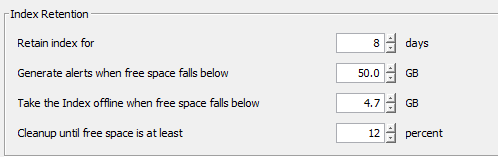
As Suresh mentioned "Index Retention value" is applicable only for V1 indexing.
Also, we would like to share the below details,
From V10 we are using indexing version1. From V11 we switched to indexing version2.
V2 indexing provides improved performance and resiliency while shrinking the size of index files in the index directory and in storage.
V2 indexing works by using a persistent index database maintained at the backup set level. During subclient data protection jobs, log files are generated with all protected objects and placed into the index database.
Now we have a feature of subclient level indexing
Please refer to the below documents,
https://documentation.commvault.com/v11/expert/indexing_version_2.html
https://documentation.commvault.com/v11/expert/agents_that_use_indexing_indexing_version_1_and_indexing_version_2.html
https://documentation.commvault.com/2023e/expert/migration_of_clients_to_indexing_version_2.html
A) Regarding V1 indexing:
*******************************
1) 'Index Retention Time in Days' and 'Index Cleanup Percent'.
2) Index files are kept in the index directory for a default of 15 days or until the directory disk reaches 90% disk capacity.
3) Index files are pruned from the index based on least recently accessed.
4) This means that older index files that have been more recently accessed may be kept in the directory while newer index files that have not been accessed are deleted.
B) Regarding V2 indexing:
*******************************
During the index backup we have the below phases,
1) A database checkpoint
2) The database is compacted
3) The database will be backedup.
Database Checkpoint:
***************************
Checkpoints are used to indicate a point-in-time in which a database was backed up. Once the database is protected to storage, any logs that are older than the checkpoint can be deleted from the index directory location.
Database Compaction:
***************************
During data aging operations, deleted jobs are marked in the database as unrecoverable, but objects associated with the job remain in the database. The compaction operation deletes all aged objects and compacts the database.
Database Backup:
*********************
Once the checkpoint and compaction occur, the database is backed up to the primary copy location of the storage policy.
So please check the feasibility of converting the indexing version from V1 to V2.
Regards,
Wasim